

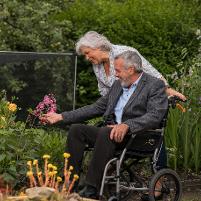
Let me tell you the story of Joe[1]. Joe is a 73-year-old man with heart failure who went to his Dr with a mild respiratory infection. She prescribed penicillin. Four days later Joe was rushed by ambulance to A&E, spending 5 days in hospital with double pneumonia, and 6 weeks recovering at home.
While penicillin is still used as a first-line drug for some mild infections, it is not a good choice for many modern respiratory infections and certainly not for an older adult with frailty.
As Sir Chris Whitty, England’s Chief Medical Officer, recently warned, older people are often "underserved" by the NHS. While the health system has become "extremely good" at preventing illness in young people, the situation in older adults is a "a lot more hit and miss". Sir Chris Whitty also points out that the medical community has been fatalistic about elderly infections in the past, adding that "people have assumed it's just one of those things that happen in old age - in fact, we can do a lot about it".
Indeed, the evidence is clear that adults over 70 are much more likely to catch and go on to become severely ill or die from an infection. In Joe’s case, Whitty’s words ring particularly true as he argues that there should be a lower threshold for prescribing antibiotics to older adults. Severe or complex infections require stronger modern antibiotics especially when this is compounded by frailty.
Frailty is a medical condition in older adults which makes them more vulnerable to injuries, illness, or surgery because their physical reserves are reduced. Frailty means that the body is weaker and less able to bounce back from these kinds of challenges. However, while ageing increases the risk of frailty, it is not an inevitable part of growing old. Many older people are not frail – though in the UK around one third of adults over 65 and probably around half of those over 85 have some frailty. As populations age so the prevalence of frailty increases globally. Indeed, older people living lower or middle-income countries, have an increased risk for frailty.
The biggest contributor is loss of muscle mass or sarcopenia which occurs as part of the ageing process but is also increased by inactivity, illness, or poor nutrition. The presence of chronic disease such as heart disease, diabetes or dementia exacerbate the risk by placing additional stress on the body. Similarly poor nutrition and low physical exercise add further stress. This increases the risk of events such as falls, hospital admissions, and complications from illness, which further increases the potential for frailty, as long periods of inactivity weaken muscles and balance systems.
Two concepts of frailty predominate: frailty as a syndrome and frailty as a state of accumulated health deficits. The Fried Frailty Phenotype delineates a clinical syndrome resulting from altered metabolism coupled with abnormal stress responses. Characteristic features are exhaustion, weakness, slowness, physical inactivity, and weight loss. Under the concept of the Frailty Phenotype a person is considered frail if they have 3 or more of the following: weak grip strength, slow walking speed, exhaustion, low physical activity or unintentional weight loss. The Frailty Index counts the number of health deficits – items that reflect reduced health or function. These include diseases or chronic conditions, symptoms such as fatigue or breathlessness, disabilities or mobility issues like difficulty walking or dressing, and cognitive issues such as memory problems. The more deficits, the higher the frailty score.
As our knowledge of the biology of the ageing increases, so does our understanding that the processes of accelerated ageing at subcellular and cellular levels (such as chronic inflammation, cellular senescence, and mitochondrial dysfunction) promote dysfunction in multiple physiological systems and thus the clinical manifestations of frailty.
While the effectiveness of directly targeting these biologic processes to prevent or reverse frailty is still unclear, there is good evidence on how to ameliorate frailty through managing chronic disease, exercise, strength and balance training, good diet and social engagement. For example, weekly strength training alongside balance exercises improves muscle mass and increases mobility sufficient to reduce the risk of falls; increasing protein intake and supplementing vitamin D and calcium can also make a significant contribution. Good management of heart failure, diabetes, depression, and pain can all improve strength and energy.
As Kim et al conclude in their excellent review of Frailty in older adults “assessing frailty enables clinicians to understand the variability in health status among older adults, provide care tailored to the individual patient’s goals and health needs, and make decisions about stressful treatments on the basis of the patient’s vulnerability. Frailty guided clinical care has the potential to overcome the ineffectiveness of current models of care by treating older persons holistically rather than treating a fragmented collection of illnesses”.
So when Joe walked into the GPs surgery – extremely thin, with a slow walking speed and clear fatigue, and the GP noted his diagnosis of heart failure – she should have immediately recognised the condition of frailty and acted very differently. A dose of appropriate antibiotics, and Joe might well have recovered within a couple of days rather than unnecessarily costing the NHS thousands of pounds with an ambulance dash, and hospital stay – to say nothing of the stress on Joe’s body and mental well-being, and that of his family.
Old age does not mean decline, dependency and special treatment, but frailty does and all GPs need to recognise this. As Sir Chris Whitty notes, without this realisation of frailty older people in the UK will continue to be underserved by our NHS.
References:
Kim DH, Rockwood K. Frailty in Older Adults. N Engl J Med. 2024 Aug 8;391(6):538-548. doi: 10.1056/NEJMra2301292. PMID: 39115063; PMCID: PMC11634188.
Howlett SE, Rutenberg AD, Rockwood K. The degree of frailty as a translational measure of health in aging. Nat Aging 2021;1:651-65.
Fried LP, Cohen AA, Xue QL, Walston J, Bandeen-Roche K, Varadhan R. The physical frailty syndrome as a transition from homeostatic symphony to cacophony. Nat Aging 2021;1:36-46.
Fried LP, Tangen CM, Walston J, et al. Frailty in older adults: evidence for a phenotype. J Gerontol A Biol Sci Med Sci 2001;56(3):M146-M156.
Stenholm S, Ferrucci L, Vahtera J, et al. Natural course of frailty components in people who develop frailty syndrome: evidence from two cohort studies. J Gerontol A Biol Sci Med Sci 2019;74:667-74
[1] Name changed for anonymity
Opinions of the blogger is their own and not endorsed by the Institute
Comments Welcome: We welcome your comments on this or any of the Institute's blog posts. Please feel free to email comments to be posted on your behalf to administrator@ageing.ox.ac.uk or use the Disqus facility linked below.
_square_xs.jpg)


_square_xs.jpg)