

Heraclitus said that everything flows and nothing stands still. The world in 2026 makes it feel like an understatement. A technology war between the United States and China, two active armed conflicts reshaping the European and Middle Eastern order, trade barriers rising between powers that spent the previous generation dismantling them, an artificial intelligence whose implications no one has fully mapped, and threading through all of it, a demographic transformation — global ageing unprecedented in scale and speed, reshaping labour markets, care systems, and the intergenerational compacts that underpin social institutions. All of these are happening simultaneously, and all of them are accelerating.
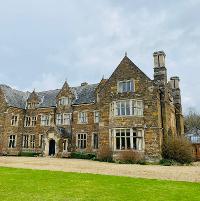
Organisations and individuals alike are being asked to navigate change. Our standard tools for doing so seemed insufficient to this moment. That feeling led me, unexpectedly, back to Aristotle, and to three days in March 2026 at Launde Abbey, Leicestershire, for a Chapter of Mats with the Capuchin Franciscan GB Delegation.
A Chapter of Mats
It takes its name from the reed mats of the earliest Franciscan assemblies. The form has changed across centuries; the spirit has not: a community coming together on equal ground to discern direction, not merely to make decisions. This is what the Franciscan tradition calls fraternity: a form of life structured around mutual presence and shared discernment. Decisions emerge from listening, not from processing. In a world increasingly shaped by algorithmic speed, there is something quietly countercultural about a room where no one optimises and everyone attends.
The Capuchin Franciscans trace a direct line to Saint Francis of Assisi, born in 1181 and died in 1226, eight centuries ago, marked this year as a Franciscan Jubilee Year by the Vatican. The Order has changed repeatedly across those centuries, sometimes painfully, without losing the thread of its purpose. Each renewal has been animated by the same question: not how to survive, but what the surviving is for. The Franciscan intellectual tradition, through Duns Scotus, had already understood this: that contingency (the fact that things could genuinely be otherwise) is not a problem to be managed but the very condition that makes purposive action meaningful.
The vow of poverty and the spirit of detachment that have sustained this are not simple renunciations. They are a form of institutional clarity achieved through struggle: the ongoing negotiation between the ideal of dispossession and the practical demands of sustaining a community across centuries. Their purpose remains openly held in common: care for the poor, accompaniment of those on the margins, witness to a way of life that questions the logic of possession even when it cannot wholly escape it. It is precisely this never fully resolved tension that has kept the tradition alive and searching across eight centuries.
I was humbled to be invited to present some frameworks of organisational change to the Chapter. In preparing, I reviewed the main traditions of modern change theory and found them unsatisfying.
What the Modern Toolkit Offers
Gareth Morgan’s influential analysis of organisational metaphors gives us a useful map of how change is conceived in contemporary management thinking. Rational design approaches treat organisations as mechanisms to be reconfigured: identify the goal, redesign the structure, implement. Cultural approaches recognise that shared meaning and values drive behaviour more powerfully than organisation charts. Power-based frameworks acknowledge the political reality that change is contested and that agency matters. Psychodynamic approaches recover depth, attending to the unconscious processes, anxiety, resistance, projection, that shape how organisations actually behave. And self-organising or flux frameworks, the most contemporary of all, emphasise emergence: complex adaptive systems that evolve without central direction.
Each of these is genuinely illuminating. And yet, as I prepared to address a community whose guiding question is what are we for, not merely how do we function, I felt a persistent absence running through all of them. Every framework was sophisticated about how change happens. None seemed, to me, to ask seriously enough the question of toward what end. Purpose, in modern change management, tends to be treated as a given input. Whether the purpose itself is well-formed, worthy, or coherent is often set aside.
The philosopher Alasdair MacIntyre, in After Virtue (1981), traced this absence to its historical roots. His argument is that the Enlightenment’s rejection of Aristotelian teleology left moral reasoning structurally incomplete. The Enlightenment offered no framework whatsoever in place of teleology. The same absence, I would suggest, runs through how organisations understand themselves and how they navigate change.
Four Causes — and the One That Was Missing
In the Physics and Metaphysics, Aristotle proposed that to understand any thing fully — a house, a tool, a community, a life — you need to account for four kinds of cause. The material cause is what something is made of. The formal cause is the structure or pattern it takes. The efficient cause is what brings it about — the actions, forces, and processes that produce change. And the final cause is what it is for: the end, the purpose.
The reason this framework spoke more directly to the Capuchin situation is that it reverses the order modern management typically assumes. Modern management addresses resources, structures and processes thoroughly, but often takes purpose as given. This framework insists that final cause is essential. What is this for? Only once that question is seriously held can you ask whether your form is fit for purpose, whether your material resources are adequate, and what kinds of action are called for.
The friars received this framework with something that felt like recognition. It gave language to something they had always practised: beginning from mission, from vocation, from purpose. After the Chapter, I continued to contribute voluntarily to some of the work streams that followed. In doing so, I have found Aristotle’s treatment of chance and spontaneity increasingly useful, not as an excuse for unplanned action, but as a permission to act under genuine uncertainty, trusting that momentum and careful attentiveness can make something from whatever convergences arise. The friars, I think, would recognise that permission. They have been acting on it ever since.
The Question We Often Forget to Ask
The concurrent changes we face — demographic, technological, geopolitical — share a structural feature: they destabilise not just existing arrangements but the assumptions about the future on which most planning tools depend. When the destination is genuinely unknown, the efficient-cause question of how do we get there loses its grip. When environments reshape faster than structures can adapt, formal-cause thinking struggles to keep up. When artificial intelligence accelerates efficient causation to a speed no human organisation can match, the question of Final Cause becomes more urgent: speed without direction is not progress, it is noise.
This is why I believe the recovery of teleological reasoning matters: framing purpose as the prior question, before structure and before process. It was abandoned, MacIntyre argues, because the Enlightenment had no replacement for it. We may still be living with that absence.
Everything flows. The question we often forget to ask is what we are flowing toward.
The author is grateful to the Capuchin Franciscan GB Delegation for their hospitality and for their permission to write about the Chapter of Mats.
About the Author
Luc Yao is a Visiting Fellow at the Oxford Institute of Population Ageing. Luc is based in Oxford and is active in the electronics industry, related start-ups, and the Open Innovation networks. His research at the Institute focuses on the adjacent domains of population ageing, innovations and strategic investments.
Opinions of the blogger is their own and not endorsed by the Institute
Comments Welcome: We welcome your comments on this or any of the Institute's blog posts. Please feel free to email comments to be posted on your behalf to administrator@ageing.ox.ac.uk or use the Disqus facility linked below.

_square_xs.jpg)


_square_xs.jpg)